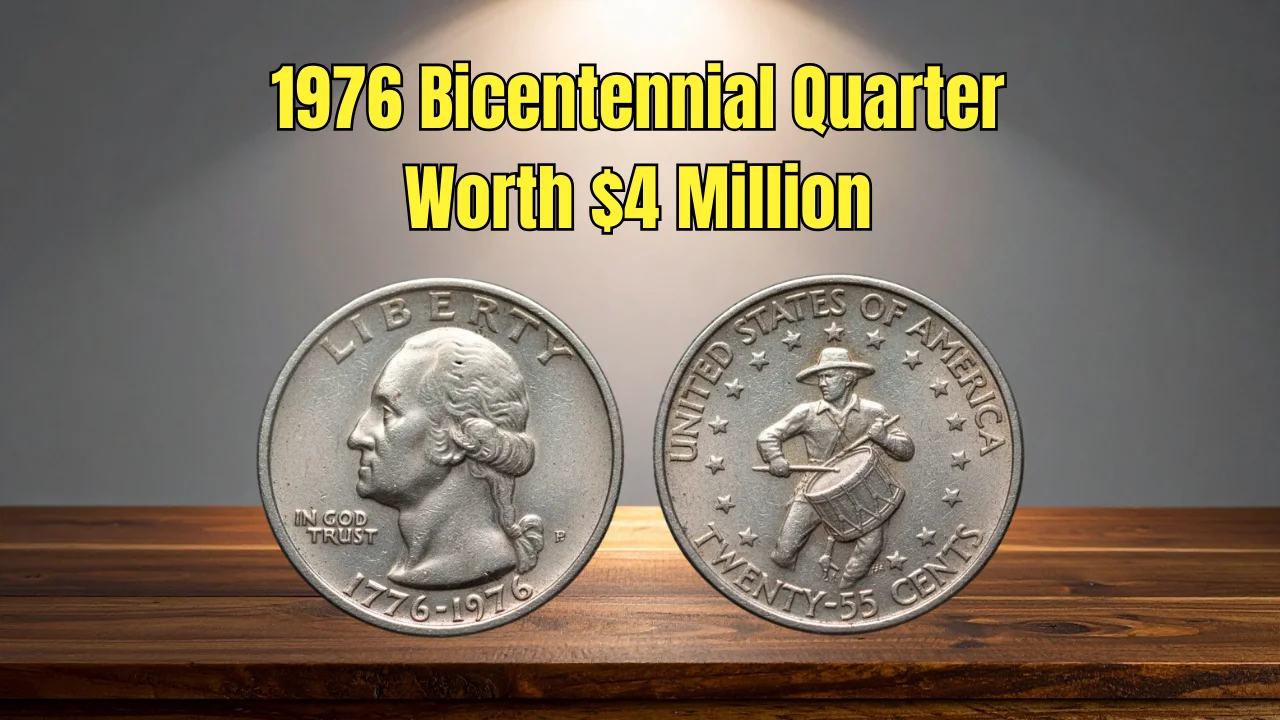
1976 Bicentennial Quarter Worth $4 Million: Let us talk about the buzz that just refuses to die—the 1976 Bicentennial Quarter Worth $4 Million. Yes, that pocket change you might overlook could potentially be worth a fortune. This quarter, minted to celebrate America’s 200th birthday, is one of the most talked-about coins in modern numismatics. But here is the thing: not every Bicentennial Quarter is worth big money. In fact, most are still just worth twenty-five cents.
Now, the 1976 Bicentennial Quarter Worth $4 Million is not your everyday coin. What separates it from the billions of others minted that year are rare features like mint errors, unusual metal composition, or pristine condition. In this post, we are going to break down how to identify the real deal. If you are someone who wants to know whether your quarter is truly valuable or just a cool piece of history, you are in the right place.
1976 Bicentennial Quarter Worth $4 Million
So what makes a coin like the 1976 Bicentennial Quarter Worth $4 Million? It all comes down to rarity and condition. While millions were minted, only a small fraction were made from 40 percent silver, and even fewer have documented minting errors. Some coins struck on the wrong metal, or those with dramatic design flaws, have made headlines at auctions, pulling in tens of thousands of dollars. Add to that a coin in flawless, untouched condition, and the value spikes.
Collectors are on the hunt for high-grade pieces, especially those graded MS70 or proof coins with error patterns. But remember, these are not common finds. Most quarters from this series are worth their face value unless they meet strict conditions. We will walk through exactly what to look for, and how to make sure you are not sitting on a hidden treasure without even realizing it.
Overview Table: What You Need to Know About the 1976 Bicentennial Quarter
| Key Feature | Quick Insight |
| Coin Type | Commemorative U.S. Quarter |
| Design Theme | Colonial Drummer with dual date (1776-1976) |
| Mint Locations | Philadelphia, Denver, San Francisco |
| Mint Marks | No mint mark (Philadelphia), D, and S |
| Metal Composition | Copper-nickel and 40 percent silver (in special sets) |
| Circulation | Over 1.6 billion coins released |
| Most Valuable Traits | Mint errors, wrong planchet, MS70 condition |
| Auction Price Range | Between 10,000 and 35,000 dollars for rare examples |
| Collector Demand | High for silver proofs and error coins |
| Common Value | Usually 25 cents in circulated condition |
A Coin Forged in Celebration
Back in the mid-1970s, the United States wanted to mark its 200th year of independence with something special. The U.S. Mint launched a commemorative coin series that included the quarter, half-dollar, and dollar coins. The quarter, though, stood out. With a drummer boy on the back and the dual date “1776–1976” on the front, it captured the revolutionary spirit of the nation.
Designed by artist Jack L. Ahr, the coin features a detailed image of a colonial soldier playing a drum, standing proud and strong. It was an artistic nod to the past, but also a symbol of national pride. This design replaced the usual eagle seen on quarters, and even today, it catches the eye of collectors and casual observers alike.
When a Mistake Tells a Story: Understanding Mint Errors
Not all coins are created equal, and that is where mint errors come into play. Sometimes, a coin is struck incorrectly or made from the wrong metal. These rare issues can turn an ordinary quarter into a highly valuable item.
For example, an off-center strike can leave part of the coin’s surface blank, while a double die error shows duplicated images or text. Some coins were even struck on the wrong metal blank entirely, giving them different weight, size, or color. These mistakes are not common, but when they happen, they create unique pieces that collectors are willing to pay serious money for.
If you find a coin that looks odd or has design flaws, do not clean it. Instead, get it checked by a professional grading service. They can tell you if it is genuine and help determine its value.
The Importance of Expert Verification
If you believe your quarter is rare or valuable, the first thing you should do is get it authenticated. Trusted third-party grading services like PCGS or NGC specialize in evaluating coins for authenticity and condition. They use a universal grading system to determine how well the coin has been preserved and whether any unique traits are present.
Authentication gives your coin legitimacy. If it turns out to be valuable, you will need that certification to sell it or have it insured. Grading also helps preserve the coin, as it will be sealed in a tamper-proof holder, safe from damage or deterioration.
Recommended First Steps
Before rushing off to sell your coin, take a moment to observe it closely. Use a magnifying glass and good lighting to examine its details. Look for anything unusual, such as doubled images, off-center designs, or odd color and texture. Check the mint mark—it will be just above the date on the front.
If the coin looks silver, check the edge. A real silver coin will have a solid silver color all around. A regular one will show a brownish copper stripe between the layers. If anything seems out of place, it is worth getting a second opinion.
Also, never try to polish or clean the coin. That can damage the surface and kill any potential value. Collectors and professionals prefer coins in their natural, unaltered condition.
Collector Value Insight in Brief
The average Bicentennial Quarter is a great piece of history, but it is not going to make you rich. However, if your coin is a silver proof, shows an extreme error, or is in pristine condition, then you might be holding something special.
It is all about knowing what to look for. The 1976 Bicentennial Quarter Worth $4 Million headlines are not entirely false, but they usually refer to extremely rare and verified specimens. For most people, the excitement comes from learning more about the coin, its story, and the thrill of possibly discovering a hidden gem.
FAQs
1. How do I know if my Bicentennial Quarter is silver?
Check the coin’s edge. If it has a solid silver color with no copper showing, it is likely one of the 40 percent silver versions from a collector’s set.
2. Can a 1976 Bicentennial Quarter really be worth $4 million?
Not typically. The only coins approaching that value are unique prototypes or error coins in flawless condition. Most are worth much less.
3. Where is the mint mark on a 1976 quarter?
The mint mark is found on the obverse (front), just above the date near George Washington’s ponytail.
4. Is it a good idea to clean my coin before showing it to someone?
No. Cleaning a coin can scratch or damage it, which lowers its value. Experts prefer coins in their original condition.
5. What should I do if I think I have a rare quarter?
Take clear, detailed photos of both sides and the coin’s edge. Then have it reviewed by a professional grading service like PCGS or NGC.